SEO Vancouver
When it comes to SEO, it seems like every specialist has their own style, and their own set of tools which they like to use. Well here is mine . . . 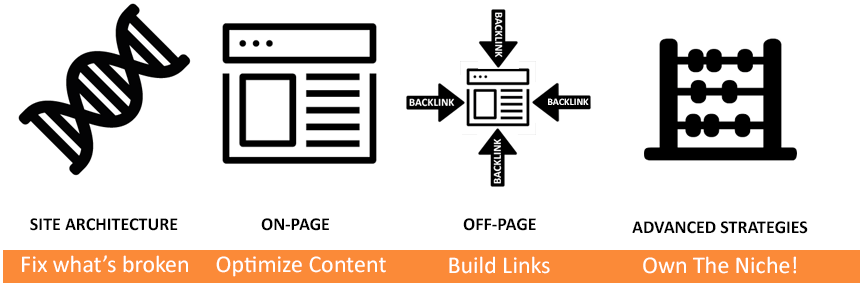
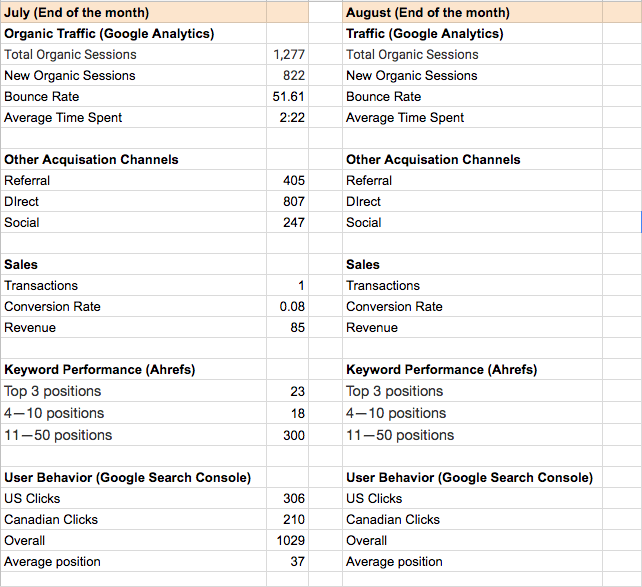 Although each business presents it's own unique metrics, in most cases, I track the following:
  Site Health Crawl (Weekly) This regular 'crawl' will help us find and fix broken links, pages and other unforeseen errors. This crawl helps us 'maintain' the site's functionality which will makes it 'easier' for Google to crawl us. Best part, there is also the ability to compare the changes from the previous time we ran a crawl. So we know exactly what's improving and what still needs improvement.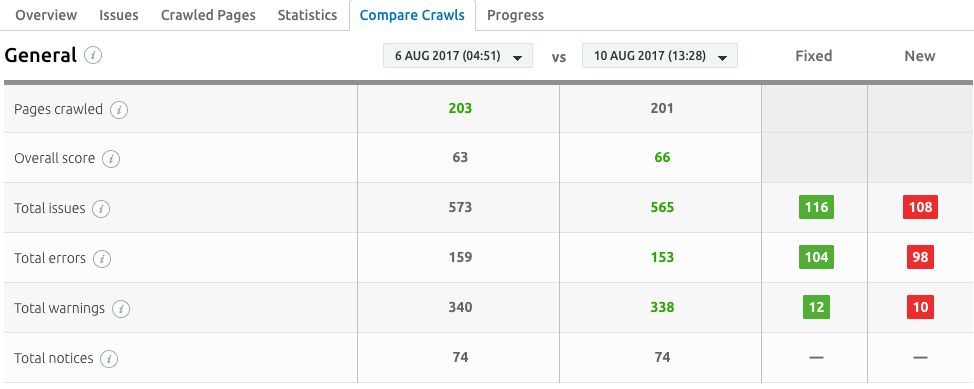
 Negative SEO is when spammers try to link to your site from various low quality sites (Porn, Child Porn, Penis enlargement sites, etc). If your site is under a Negative SEO attack, I will inform you immediately as getting rid of these links is the first priority. Good news is I'm an expert at finding and disavowing these bad links (Working in the Pharma industry teaches you a thing or too). I've brought several sites from being spammed to becoming a total 'model' website (Including clients in the 3D Printing and Educational space). In fact, a lot of the domains that I buy for testing now and then are sometimes under a negative SEO attack. Since I know how to clean them quick, it's not a big deal for me. Negative SEO is annoying and time consuming, but not something I can't take care of. I'm a big believer in prevention so I implement "Backlink Alerts" on all my sites. Right off the bat. This gives me the time to disavow any bad links before they really take effect. It's always good to stay ahead of the game. These days, this is a must. Not just so we can see all the new links coming in but also to monitor any bad ones (Negative SEO). Here is what a "Backlink Alert Report" looks like:
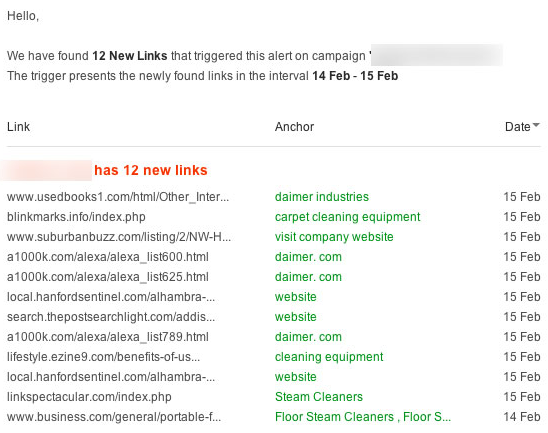 You'll be getting these emails on a regular basis (If you choose to receive them). I monitor them anyways. This is how far I'll go with reporting and we won't move forward until your site's current architecture is on point. Although I do start link building from day one (Most important part of SEO in my opinion), I will need to sort out your site's architecture simultaneously. After all, what's the point of building links if they are not really helping us right?
In a nutshell, it’s all about fixing what’s wrong (Site architecture from the inside / backend), improving on what we can (On-page, Content, etc) and then working with what we have to push your site up to the first page for your chosen keywords (By building links or better known as Off-Page SEO).
So when someone types in the keywords you want to rank for, your site shows up and the user takes the desired action. Once this ball starts rolling, we then get into advanced strategies and start making a serious dent in your niche.Of course there is so much moreto the entire process but in a "nutshell", this is all there is to it.
Once we connect (In person, phone, Skype, etc) and we agree on moving forward, the games will begin. Here are the 4 steps that I'd like to go by:- Site Audit and Negative SEO check
- On Page
- Off Page
- Advanced Strategies
Phase 1: Site Structure and Negative SEO Audit
This is commonly known as a ‘Site Audit’ but I like to call it ‘Site Structure Audit’. I think it’s more specific and focuses on the problem more. Plus there are so many of these so called ‘site audit’ services out there that it has killed any integrity behind this phrase. Anyways, this is where I will see what’s wrong with your site’s architecture and your existing backlink profile (Negative SEO issues, redirect chains, etc) and try to fix them as soon as possible. Let's start with the site architecture . . . When your site structure is broken or has internal conflicts, it means the ‘link juice’ isn’t being passed around properly. Link juice refers to the "points" you receive when other sites link to you. Think of it as Google's voting system. The more sites link to you, the higher your rankings are going to be. Obviously the entire process is much more complicated than this but this is the main idea. So to get things going, I will kick things off with a tool called SEMRush. I will run your site on it and do a full audit. This will tell me exactly what's holding your site's progress back (Especially the technical errors). Some of the most common issues that are uncovered are:- Internal Broken links / pages - Also known as 404 Errors.
- Redirect chains (Don't even get me started on these . . .).
- Duplicate content - Google penalizes sites if they are repeating the same content in different places on the site.
- Duplicate titles - Similar issue as above.
- and the list goes on . . .
- Benchmark Report.
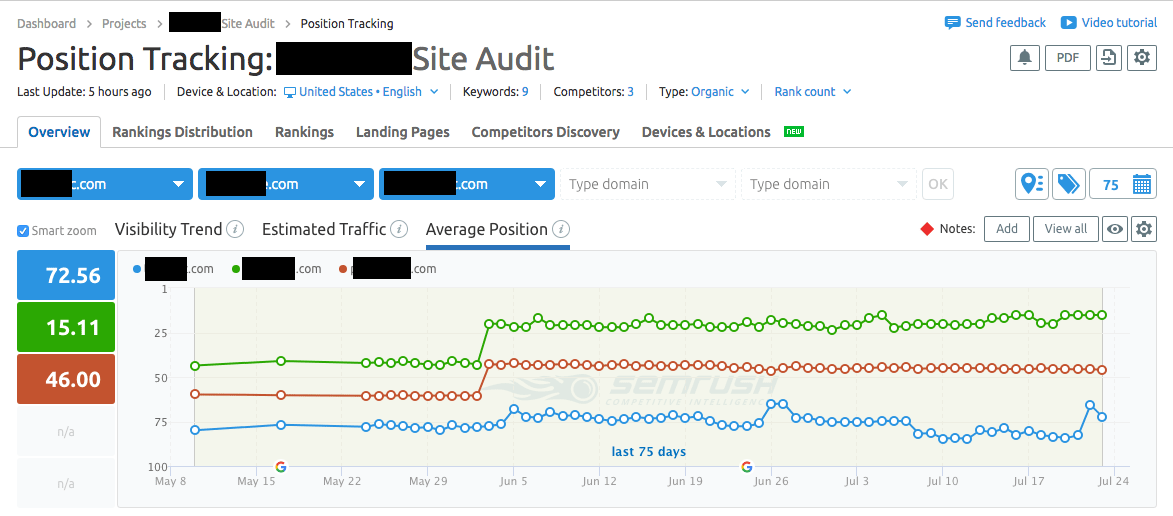
- Keyword Tracking.
- Weekly Site Health Crawl.
Although each business presents it's own unique metrics, in most cases, I track the following: - Organic Sessions from Google.
- New Organic Sessions.
- Bounce Rate.
- Average Time Spent.
- Referral Traffic.
- Direct Traffic.
- Transactions.
- Conversion Rate.
- Revenue.
- New Top 3 Positions (New keywords on the first 3 positions on Google).
- New 4-10 Positions.
- New 11-50 Positions.
- Clicks (Google Search Console).
Site Health Crawl (Weekly) This regular 'crawl' will help us find and fix broken links, pages and other unforeseen errors. This crawl helps us 'maintain' the site's functionality which will makes it 'easier' for Google to crawl us. Best part, there is also the ability to compare the changes from the previous time we ran a crawl. So we know exactly what's improving and what still needs improvement. Negative SEO Audit
I also do a Negative SEO check before I begin any kind of work. It's part of my preliminary checks. If your site is under a 'NegSEO' attack, taking care of these bad links will automatically become a priority. Regrettably, Negative SEO is as common as ever. In fact, I haven't had a single site that I've worked on which ended up on the first page for it's desired keywords that DIDN'T get hit by Negative SEO. It's just part of the SEO landscape now. Whether you are a small car rental company or a massive VC funded tech startup, when you end up on the first page, someone will try to attack you. What is Negative SEO? Negative SEO is when spammers try to link to your site from various low quality sites (Porn, Child Porn, Penis enlargement sites, etc). If your site is under a Negative SEO attack, I will inform you immediately as getting rid of these links is the first priority. Good news is I'm an expert at finding and disavowing these bad links (Working in the Pharma industry teaches you a thing or too). I've brought several sites from being spammed to becoming a total 'model' website (Including clients in the 3D Printing and Educational space). In fact, a lot of the domains that I buy for testing now and then are sometimes under a negative SEO attack. Since I know how to clean them quick, it's not a big deal for me. Negative SEO is annoying and time consuming, but not something I can't take care of. I'm a big believer in prevention so I implement "Backlink Alerts" on all my sites. Right off the bat. This gives me the time to disavow any bad links before they really take effect. It's always good to stay ahead of the game. These days, this is a must. Not just so we can see all the new links coming in but also to monitor any bad ones (Negative SEO). Here is what a "Backlink Alert Report" looks like: You'll be getting these emails on a regular basis (If you choose to receive them). I monitor them anyways. This is how far I'll go with reporting and we won't move forward until your site's current architecture is on point. Although I do start link building from day one (Most important part of SEO in my opinion), I will need to sort out your site's architecture simultaneously. After all, what's the point of building links if they are not really helping us right? Phase 2: On Page SEO
This is where I optimize the site with your typical ‘Title Tags’, using headings, sub headings, etc. I also look for any duplicate content that we can take care of (That we may have discovered) in Step 1 (Site Architectural Audit) and will use smart ways to increase your current search engine footprint. Again, depends on the site and the niche. For example: One of my latest clients had tons of blog posts but they were around 300 - 500 words. So I combined the ones that I could (The ones that made sense of course) and re-published those posts (Added the proper 301 redirects as well). At the end each post was well over a 1000 words. The results? Our traffic continues to be on the up and up. Bottom line is Google loves long authoritative copy. I also like to see if there are some other forms of media that might be missing like PDFs, Infographics, Videos, Audio, etc. From my experience, the more different types of media you have, the more of an authority you become. Eventually, Google starts ranking you like one as well. Again, this is more of an ongoing thing. So at this stage, is basically tweaking content and adding the proper keywords where they should be. After the initial keywords are placed throughout the site, I will start working on a more 'advanced' keyword list that will help us rank and increase conversions faster. As the days go by, I will start 'sprinkling' keywords from this list as well. Keyword research is also an ongoing thing. As the landscape of your niche changes, so will the keywords.Phase 3: Off Page SEO (Link building)
Although I start link building from day one, this is the most powerful (Also the most difficult) stage. Lucky for me, I actually enjoy link building a lot. My goal is to wrap up the first two phases in the first 30 days and get to this stage as soon as possible. Link building is something I really enjoy because it get’s results. I love getting results. It’s one of my core values. I get all my links from where most SEOs get them.- Blog Comments
- Forums
- Web 2.0s
- Guest Posts
- Citations